
Chord Library
Find any chord, hear how it sounds.
Yes! If you find a chord shape too difficult to fret, more often than not, you can omit string 4 and play just the notes on the A, E, and C strings.
For example, the fourth voicing of D major (for high/low G tuning) is shown on the left, while an easier way to play it is shown on the right.
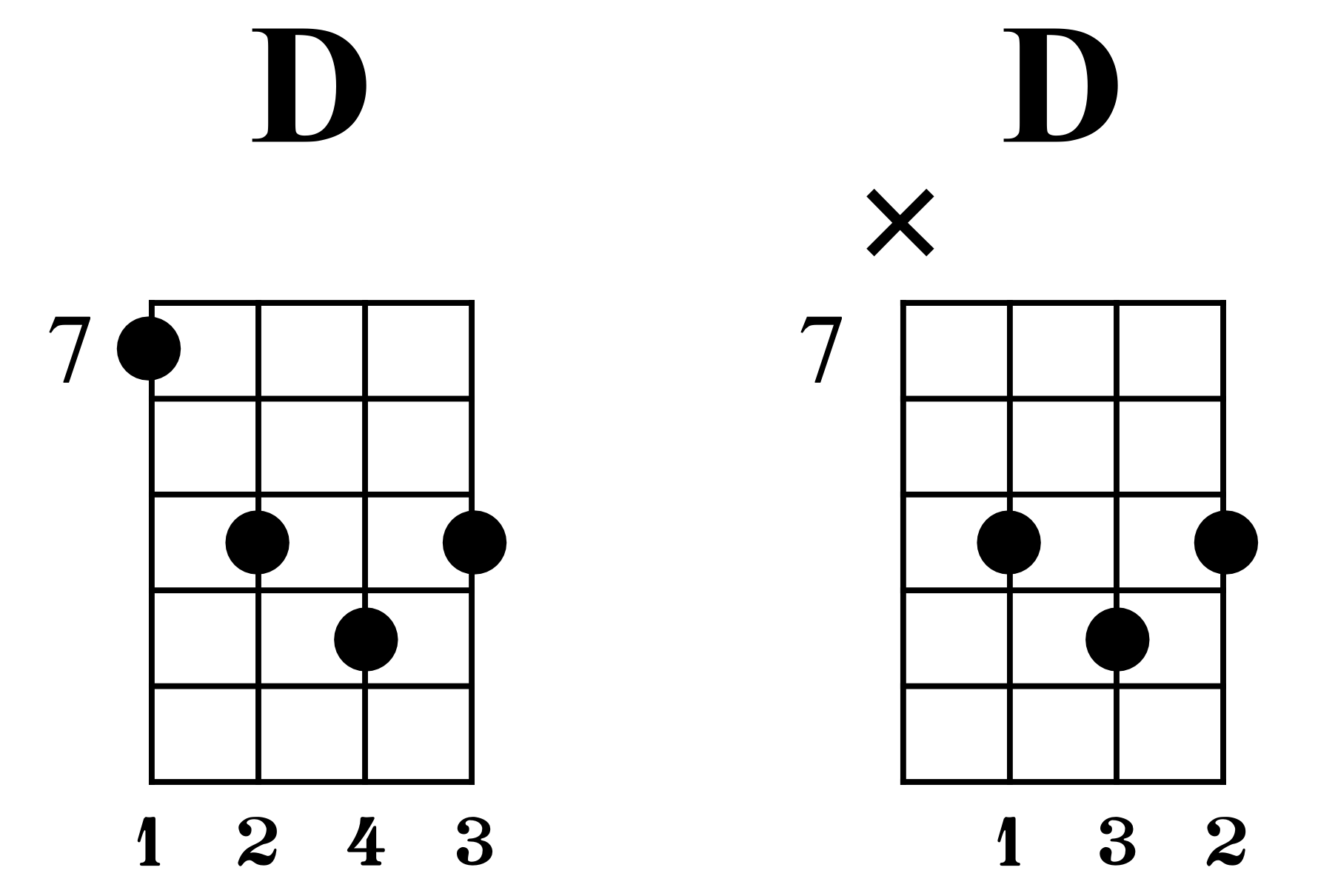
Fun fact: You may have noticed that the easier-to-play D chord uses the exact same shape as the standard G chord, just moved higher up the neck. So how does that work?
The key is understanding that a chord and a chord shape are not the same thing. For example, if you take a G chord shape and move it up to the ninth fret, it becomes a D chord. The shape stays the same, but the notes change, which changes the name of the chord.
If that just blew your mind, check out this lesson for a deeper dive into movable chord shapes and how they work.