
-
AuthorSearch Results
-
March 4, 2025 at 8:15 pm #65901
 AndrewKeymaster
Here is everyone on page 8.
@yukalele – To me, this piece sounds great played fast or slow. It’s just such a lovely tune and you played it beautifully David! Try adding it to your warm up routine. The more you play it, the more it will help with memorizing.
@nelsonlin2021 – That was awesome Nelson! The thing I’m hearing that I would recommend you work on is keeping the tempo steady. I’m hearing phrases that are fast followed by phrases the slow down. So I’d suggest working on one section at a time. Start at a slower tempo than you are playing at now. And play along with a metronome. Gradually work to boost the tempo over time. I think that approach will yield the best results.
@jody_hendrickson – Your rhythm technique is amazing, Jody! Great feel throughout, too. I’d say you aced all of the techniques in this piece. The main thing I’d focus on is bringing the sections where you slowed down up to the speed of the rest of the piece. Once that feels solid, you can start working on increasing the overall tempo. But again, well done, impressive work!
@maryjanew – Congrats to your daughter! You played it beautifully, MJ! I think it’s totally fine to use a floating hand strum technique if that feels more natural for you. What stood out to me was how nicely the piece flowed. Fluidity is super important in this tune, and your performance had it in spades, along with great sustain. For the A string notes that occasionally didn’t ring out, double-check that your left hand isn’t accidentally touching the string when fretting those higher chords around the 9th and 7th frets. Well done this month!
@xerxes – Hi Milo, below is a video with feedback for you. And here is a quick video that I made for another member a few years ago on how to hold the uke. If you’d like to dive further, here is another lesson and one more covering this topic in more detail.
@leihali – Here is my feedback for you 🙂
@otzepeng – You played it wonderfully! Unfortunately, you submitted past our deadline for February, but you can def revisit it for the March challenge 🙂February 13, 2025 at 11:17 pm #65610In reply to: Howdy! Wanted a quiet, portable instrument
AndrewKeymasterWelcome Carl! Below, I’ve embedded a quick video I made for a member a few years ago on how to hold the uke. Additionally, we’ve covered proper holding technique in our Beginner’s Course and in the Classical Course.
But to directly answer your question, Steven is using Form 2, which uses the index finger to help support the neck. We actually had an email come in last month on this topic, and Steven filmed this video talking in more detail about his holding technique. But in a nutshell, he’s using form 2.
If you have any questions, please let me know. And def, please do not use a kitchen mat lol 😂
February 13, 2025 at 9:09 pm #65608Topic: Howdy! Wanted a quiet, portable instrument
in forum Introduce Yourselfcarlreimann
ParticipantHi All!
Over the years I have tried various instruments, but they were all too loud for my taste. On a lark I bought a ukulele, and finally I’m getting around to learning it.
I do have a question. I know that ‘holding the ukulele’ is addressed in introductory material here, but I don’t quite understand it. Consider this video from minute 8:00 on, for example:
I don’t see how the ukulele is held stable. There are moments when it seems like it should fall or shift, and it doesn’t; yet I don’t see a strap.
I was thinking of trying a rubbery dish drying kitchen mat, to see if that might help. Basically when I try to hold my concert-sized uke, it slides around and doesn’t stay put with the kind of stability that seems normal.
Tell me your ukulele holding secrets!
February 1, 2025 at 7:45 pm #65501 stephencoxParticipant
Here’s everyone from halfway down page 11 through page 13:
@morrieuke1 -That was an excellent composition! Your hammer-ons and pull offs added a lot melodically, and the harmony was very nice as well! The section at 0:34 has some interesting challenges with the barre chords and pull-off combinations. Try slightly different angles on the hand/fingers to see if it makes that section any easier to play through. I really like the composition, and my cat enjoyed it enough to stick around, too!
@joe150 – You’re doing a great job, and I think I recognize that segment of Moonlight Sonata. It sounds like you have are getting to the changes, so what might be a good next step is to slow down the finger picking to match the tempo you change the chords at. The goal of doing this would be to play the passage while keeping the timing and flow of the piece. You are doing a great job so far, keep it up!
@rgillof – I think you achieved your goal. It looks like you have all of the notes memorized, and you are playing them with a good sound. The next step from here is to slow down the tempo a bit, and use a metronome to encourage your hands to “think” ahead. Some of those shifts are tricky, and practicing them slowly and evenly will help. Then after getting the song under your fingers with the metronome, you can go back to a less rigid interpretation of the tempo, but now the phrases will connect all the way through to the high notes smoothly. Keep it up, you are doing great!
@grannieannie – What a cool song to pick! Due to the particular chords, getting a clean vibrato is hard on this song! You are off to a great start, and I can hear it as well as see the vibrato! It may be nice to find a song with single notes or double stops (two notes at a time) instead of full chords while you develop this technique, as right now it’s more about making the motion feel more natural. Once you have a strong and natural vibrato on something simpler, it will translate much easier to something like this that is more challenging. Still, you are doing a great job in spite of the challenge!
@akukes73 – Very nicely done! This is a tough piece to tackle in just a month, and you are doing a great job! Keep working on melodies 7 and 8 at a slower speed, and keep a steady tempo through this section no matter how slow you need to go. You’re doing a wonderful job, keep it up!
@jbmills07 – This was very heartfelt, and you did a wonderful job of singing and playing. I’m so sorry for what Regina has gone through, but I know that she loved that you played and sang for her. You did great with the muscle memory and coordination, and you have a great voice. I hope to hear you sing more in the future, your voice has a very peaceful quality to it. I’m sure that was soothing for her, I feel certain she heard it.
@yukalele – Congratulations on your grandson! Your clawhammer technique is sounding great to me! Just a tiny bit more work on accuracy of not hitting more than one string and then it’s time to work it up to speed! Keep working at it, you are doing great!
@emiliano – You are doing a wonderful job on this! Those harmonics are a wonderful touch, and I’m very impressed with how cleanly you are getting that 1st fret mini-barre with the stretch to the 7th fret while keeping the E string open. Phenomenal work and progress on this one!
@mickan88 – You played this song very well! All of the notes were clean, and the thumb technique was consistent. My only suggestion is to count how long you are holding out certain chords before moving to the next section. At 0:21, that chord should be held out for 3 beats before the next chord, but I noticed you came in after 2 beats…it’s possible that a dotted half note is being mistaken for a plain half note there. It’s a small detail, you did a great job on this one!
@bibilele – Very nice job with the harmonics! I could hear them all very clearly. Great job on meeting your goal for the challenge!
@janaq1 – Your arrangement is very nice, and so is your playing! You have a great feel on this, and the triplet strums are a nice touch! Great job on this one, and your timing was strong throughout!
@leslieb – Great work on this! Your Bb chords are sounding good, and it was nice to hear them in two different contexts. In Stand By Me you got into the first one cleanly in time! Now it’s just a bit more repetition so that it becomes second nature. You made a lot of progress on this!
@jgillard – I like your interpretation on this one with a more rubato tempo than Andrew’s original. You sound like you have a pretty good grasp on this one. Well done! If you are wanting a less rubato interpretation, just play along with the tab player at a slightly slower tempo. If you choose to keep the rubato tempo, might I suggest adding dynamics of your own to swell with the tempo? Great work on this one!
@leihali – Great progress on this one! The left hand is looking great. I’m glad Andrew’s advice is working for you. The only other suggestion I have is to practice the transition into measure 20. That barre chord is a bit difficult, just make sure you don’t mute the open G string while focusing on the rest of the chord. Keep it up, you are playing this wonderfully!
@maryjanew – I’m very impressed by the progress you made since the last post! You seem a lot more comfortable while playing, and you are keeping a good rhythm and flow with the piece. I hope you have fun at the open mic! One thing that might help is to practice this in different locations in your house…standing and sitting so that a different environment doesn’t affect the way you play. Awesome job on this challenge!
@jody_hendrickson – Your technique looks great and very relaxed. This should be an ongoing goal for every instrumentalist. Wrist and arm injuries affect so many of us. I often find myself having to remember to relax. It may help to just have that word somewhere in front of you in your practice space. Keep it up, and I hope your tennis elbow heals.
@nelsonlin2021 – Great work on your goals this month! Since this last goal is specific to tapped harmonics, I have a few suggestions on that one part of Mr. Sandman: make sure that when you tap, you immediately bounce your right hand finger off of the string. Even leaving it on the string just slightly too long will mute the harmonic. Secondly, tap directly over the metal fretwire rather than the area you would normally push down when fretting a note. Andrew covers this in great detail at 7:20 into the premium video on that section of the course. You have the basic idea, but getting the bounce off of the string while hitting lightly over the fretwire does take time to master. Keep up the great work!
@markmdive – You have a very nice sound on this, and your tone is great! Your ukulele has a warmer tone to it, which does make it a bit tougher for the melody notes to ring out. Keep working on plucking the melody notes a bit harder to have them stand out from the rest of the piece. I think the rhythm is coming along, it’s just about working out the hesitations on certain slides and shifts. Practice those in time slowly so that you are able to keep the rhythm/flow even when the left and right hands are playing difficult passages. Keep it up, you’re doing a great job!January 18, 2025 at 6:29 pm #65236Topic: Two Songs I’ve Been Working On “Of Late”
in forum Showcase Your Playing The_Bumble_BardParticipant
Hello friends!! 😊
I feel like I haven’t shared anything I’ve been working on here in a really long time, even though I am always trying to create and work on new ukulele things. So, I thought I’d share a couple of uke arrangements I’ve tried to create recently, one is pretty much done and one is “in progress.” 😅 Well, they’re all in progress because they might change over time, as happens. But yes, I thought I’d share a couple. 😊
The first one is, “I Want To Hold Your Hand” (in progress):
I wanted to share that one in particular because it was so inspired by songs here on Rock Class 101. 😊 The intro with the tremolo is inspired by Marianne’s beautiful song, Contemplations (shared yesterday), and also inspired by my goal to work on that technique this month. The verses were inspired by an arr. Steven did a while ago of Where Is My Mind? I tried to capture the feel/style he created with that. Then the chorus was inspired by an arrangement Matt did of O Come, All Ye Faithful. If you know those songs here, hopefully you can see what I was going for. 😂 I already sent that one to Matt because I wanted to share it with him. But yes, I hope you like it; I am still hoping to add the bridge and maybe I can share that for the challenge this month because now it includes the tremolo technique. 😊
Also, of course, I’m simultaneously working on a clawhammer version (also included in that video). I’m starting to like the way that sounds more now. 😂
I’ll actually come back a little later to share the second song because I think I can get a better take of it now than the recording I have. 😂 I hope you like it first one though! Thank you if you get a chance to listen! 😊🥰
December 30, 2024 at 3:00 am #65062 KasiaParticipant
1. Execution
My three goals for January are:
– to complete the Definitive Beginner’s Guide
– to learn to play “Path of the wind” from Totoro while focusing on holding the ukulele properly and not like a guitar
– to remember I’m doing this for fun and defeat negative thoughts like “it’s too late, I’m too old and I’m only making a fool of myself”
By the end of the month I want to be an intermediate beginner 😉2. Application
I want to dedicate some time every day to playing the ukulele and write down what I practiced and for how long. Before the end of the month I want to record myself playing at least part A of the song from Totoro.I will not judge myself if I fail. I will not stop playing the ukulele because of negative thoughts about myself. If I want to give up, I will ask for support on the forum.
3. Evaluation
I’m going to post updates on my progress every week in this thread.December 21, 2024 at 5:07 pm #64997AndrewKeymaster@avicularia – Very beautifully played, Kasia! I only have one suggestion. For the double stops, try strumming through just a touch faster so they don’t sound as arpeggiated.
@markmdive – Hi Mark, below is a video with feedback for you. And here’s a video I made to help another member out. I’ll also paste additional lessons that touch on this topic. Here is the first and second lesson I recommend reviewing.That last link also covers proper left hand form and here is the one for right hand form.
@hotshot & @karenj – Y’all played it beautifully, well done! Unfortunately, you just missed our deadline. I tried to give everyone a friendly reminder yesterday. While I won’t be able to give you an entry for this month, both of you do have entries from prior months that will count for the drawing 🙂December 1, 2024 at 10:16 pm #64733AndrewKeymasterHere’s everyone on page 14.
@cimarronsailor – Very cleanly played and great timing too! As for the chunks in measures 13 – 15, I actually think it sounded great not playing them. If you do want to add them in the future, the chunk in bar 13 uses the technique I taught in this lesson. And the ones in bar 14 is the same technique you used for bar 26.
@addilein – Nicely played Astrid! So some of the rhythms I’m hearing you play are incorrect. I’d recommend playing along with me in the tab player, slowed down, maybe 60% speed. Start without playing the ukulele. Count out the rhythms as you watch the tab/sheet music scroll across. So for ex, in measures 1 and 2, you would count:1 2& 3 4&
1& 2& 3& 4&When your voice matches my playing exactly, try playing along and counting out loud as you play.
Remember to keep the swing feel intact and I’d recommend watching this lesson on 8th note triplet rhythm. It’s a great resource to help you clearly define those notes as triplets.
The other thing I’d like to mention is that I notice you hug the neck a lot. Check out the advice I left here for @mysticrick. It’ll give you insight into how hugging prevents left hand dexterity, especially when playing melody notes on the A string.
@markmdive – Nicely played Mark! So I noticed that you sit with the ukulele in a classical guitar-like position. I’d recommend watching this lesson and the one that follows it, from our Classical Technique Course, as Steven talks about why that position isn’t ideal for ukulele playing. His lessons cover correct sitting position/posture, as well as, how to hold the ukulele.I’d also recommend checking out this lesson. Form 2 shows you how to use your index finger to help support the neck so it doesn’t move/fall. That is vital for the jumps (up the neck) that this etude uses.
@ukealori – Way to go Lori! BIG congrats on memorizing it and you played it beautifully! Well done 👏
@maryjanew – Nicely done MJ! I think you’ve got a great base established, so from here, I’d work on perfecting one section at a time.
@jasdel – Beautifully played Jasdel! I loved it ❤️The_Bumble_BardParticipant@lhamilton, that sounds so cool, a Celtic harp! I would love to hear that, to hear your harp-flavored noodling. 😁 If you ever wanted to share that here, that would be amazing! Thank you for the reply! 😊
I feel like the ukulele is, in some ways, one of the easier instruments to start noodling on, just because the first chords you learn on uke are pretty easy, like the C Major chord, F maj, G maj, and A minor chords and even just with those you can play some very pretty things without even thinking, just randomly fingerpicking while holding those chords. That’s what I did literally when I first started playing uke and I still love to play that way. For me it’s very therapeutic and relaxing to do that, to just relax and play through chords that way.
Even though I still only know a couple of notes on uke by name, I just try different chord shapes and create little melodies around those chords. It doesn’t always sound perfect but sometimes amazing things come from just trying different chord shapes that way. That’s one way I like to noodle. And again, learning really well written songs, like RC101’s, and reinventing them or simply just fingerpicking them differently or using a different technique to play the same-ish notes in the song. 😊
I’ll share another example of noodling soon, just gotta try to record a video! I hope more people decide to share their noodling examples. 😊
 planetfinkParticipant
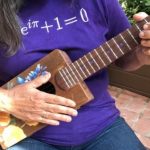
This isn’t the 4/4 waltz but I wanted some place to post this. I submitted my May entry early this month so I started working on Where is My Mind. A beautiful piece but it took a frustrating amount of time to get it together. This recording has problems (including one time I almost lost hold of my ukulele) but I wanted to put a record of the work I did somewhere.
May 30, 2024 at 3:04 am #61756stephencoxParticipantHere is the everyone on the rest of page 4:
@bibilele – That was a very nice take on Clocks! You are playing each section very well over all. It seems like just a tiny bit of work on transitions between sections is all that’s left. Getting into the piano riff variation is tough! I recommend isolating measures 20 and 21 and practicing just that spot slowly to master shifting into the upper register. Keep it up, you sound great so far!
@marianne – Wow, that was an awesome performance of this one! You have the perfect amount of reverb for this song, and I’m impressed by the tone you are getting out of your ukulele in addition to your playing! You have a great feel on this one, and are executing the tempo changes and dynamics very well. The only spot that might benefit from a bit of extra work is measure 21. That hammer-on/pull off figure is meant to be played just a bit faster, so once you work it up to the main tempo of the song, you have mastered the whole piece. Excellent work on this one!
@1481632_m – Great job on this one! I’m glad you didn’t let the barre chords deter you. You seem to have the notes under your fingers at this point, and now it’s time to work on the rhythm a bit. My main suggestion is to make sure to hold the notes out long enough at the ends of phrases. It may help to practice this one with a metronome at a slow and steady pace. Make sure to count the space between the end of one phrase and the start of the next to allow the song to “breathe” between each phrase. You are doing a wonderful job, keep it up!
@leslieb – You are playing this one well so far! The next step is to work on playing the song with a steady tempo. I recommend playing at a slightly slower tempo than you currently play intro so that you can play the other sections without hesitating as well. It might be best to play with the Tab Play Along at 50% speed, then gradually work it up to 75%. This will be a bit easier than playing to a metronome. It’s a bit of extra work, but it can help your performance flow smoothly from beginning to end. Keep up the great work!
@jedart – Great work on this one! You have the notes down, now it’s time to practice this one at a slow and steady tempo to keep the flow of the song consistent from beginning to end. Try playing this one with the Tab Play Along at 50 – 75% speed. In addition to the consistent tempo, 50% speed might give you enough time to maneuver your hand on the last chord to see which notes aren’t ringing as well and fix it as you are playing. Keep going, you’re doing a great job!
@lhamilton – You are doing a great job on this one so far! You have the Piano Riff up to full speed, and I can tell you have all of the sections under your fingers fairly comfortably. Now it’s time to play the song just slightly slower to keep the tempo consistent throughout each section of the song. Try using the tab play along at 75% speed and make sure not to get ahead on the parts you know best. Keep it up, you are doing a wonderful job so far!
@otzepeng – Very nicely played! You did a great job of keeping a steady tempo when the song called for it, and gradually slowing down in the correct places. You have a good handle of the notes as well. Just a bit more playing and you will work out the tiny mistake and any notes that weren’t clean. Keep going, you’re basically there!
@gstriph – That is a beautiful uke, and it has a nice sound! You played this song well! You have the notes down, now it’s time to work a bit on the rhythm. After the first chord, the next 4 notes are evenly spaced. The rhythm in the first measure is couned as “one (rest) three and four and,” where we hold out the chord through beat two, but play the other notes a bit quicker without pausing before the last one. There are other spots where the rhythm could use a bit more work like this one, but just getting this one part correctly will help the song flow smoothly. Keep working on it, you sound great so far!
@karenj – You are doing a wonderful job on this one! I like that you focused on a consistent tempo over playing the song at full speed. The cool thing about this song is that it sounds great even at 75% speed. Overall, you are succeeding in keeping the tempo consistent. Keep going, you’re doing a great job!
@ukandrea – Wow! I love that you did this on piano and uke! They sound great together, and you are doing a fantastic job. Due to the nature of the arrangements being different, there are a few places where I would alter certain aspects of the ukulele part to match the piano even more: A few of the chord hits and melody notes are anticipated on the piano arrangement, where the ukulele waits for the next down beat. In these particular spots, It would be reasonable to alter the ukulele part ever so slightly in addition to the swing feel you already captured. Excellent job on this one!
@anyon1 – Very nicely played all the way through! It’s tough to keep a consistent tempo throughout, but you were super close! My biggest advice on this is to pick your starting tempo based on the speed you feel the most comfortable playing the most difficult part of the song. It seems like you slowed down slightly for the bridge, but sped back up for the piano riffs. I would rather you slow down the piano riffs and keep the bridge where you feel comfortable. Other than that slight tempo shift, you nailed this one! Awesome job on this one!May 29, 2024 at 1:04 pm #61740 lhamiltonParticipant
@The_Bumble_Bard, I did a bit of looking through the Internet about straps for guitars and ukuleles and what might work best for females since we’re built differently from guys and often have trouble with holding stringed instruments securely and comfortably.Based on what I found, I’ve double-strapped some of my ukes, attaching one strap from the headstock to the end of the body, and one from the bottom to the top of the body. I attach the two straps loosely together using bits of cord to prevent them tangling. I’ve found this arrangement works well for my Flight electric uke.
Linda
May 27, 2024 at 10:34 pm #61722 emilianoParticipant
Hello @gi_gi_ Gigi, nice to meet you! o/ Thank you for your kind words!
Is the uke I’m holding in the video(Enya E6). Since it’s not available for purchase here in Mexico, I had to contact Enya directly and have it shipped via UPS. When it arrived in Mexico, it was held in customs for almost a month because an expert in wood needed to inspect it.
But finally, it arrived at my house this past Thursday. I’m still getting used to it; before this one, I only had a plastic Enya ukulele. The bridge on this wooden uke is wider, and the action is a bit higher. However, the sound is really good, and I’m loving it a lot.
-
This reply was modified 2 years, 4 months ago by
 emiliano.
March 30, 2024 at 7:38 am #61043 suekuleleParticipant
@leb397 Thank you very much 🤗
@The_Bumble_Bard that is o kind of you! Thanks o much for the hair compliment! Has been a big transition for me to “embrace the grey.” Also, do you mean holding the ukulele on you lap instead of with you forearm? I can hold a concert sized Uke with my forearm for most songs, but not a tenor. I fin ld it really difficult (almost impossible for me)to move around the fret board whilst holding with my forearm!
@Andrew – you’re the best – thank you!!March 15, 2024 at 12:41 pm #60895In reply to: Help on Musical Arrangement
 janaq1Participant
Hi Gery,
To your question: When you hold a chord shape, each string plays the note that belongs to the chord, so you can play any of strings. It’s just a matter of choosing the order of the strings that will please the ear.
In general, it can be said that basic accompanying arpeggios start with the lowest note (“bass” string). To begin with, it is easier to play all the notes at the same length.
As with the Down Up strumming technique, you can play arpeggios from top to bottom and back.To me, a linear tuned ukulele is like a guitar without the top 2 bass strings. A baritone ukulele is tuned just like a guitar, a Low G ukulele sounds like a guitar with a capo on the 5th fret. So even the accompanying arpeggios can be copied to a certain extent.
In the case of this song, I noticed (perhaps correctly) that the lady with the guitar uses the pattern: 4 3 2 1 2 3 4 3
There are many other patterns. I like these basic ones (according to the beat):
2/4 (4/4): 4 3 2 3 1 3 2 3
3/4 (6/8) : 4 3 2 1 2 3On ukuleles with reentrant tuning, the bass string is the 3rd string (C string). In the basic forms of major and minor chords, usually only 3 different notes sound on the 4 strings – for example, in the Dm chord in the form 2 2 1 0, the notes A D F A sound.
In that case, I don’t need to play the same note on multiple strings, so I can skip the 4th string altogether. I start on the 3rd (bass) string with the D note and then try to imitate the alternation of tones (strings) so that it sounds similar to linear tuning (guitar).Good luck with your song arrangement!
-
This reply was modified 2 years, 4 months ago by
-
AuthorSearch Results
Search Results for 'how to hold the ukulele'
-
Search Results
-
Hi All!
Over the years I have tried various instruments, but they were all too loud for my taste. On a lark I bought a ukulele, and finally I’m getting around to learning it.
I do have a question. I know that ‘holding the ukulele’ is addressed in introductory material here, but I don’t quite understand it. Consider this video from minute 8:00 on, for example:
I don’t see how the ukulele is held stable. There are moments when it seems like it should fall or shift, and it doesn’t; yet I don’t see a strap.
I was thinking of trying a rubbery dish drying kitchen mat, to see if that might help. Basically when I try to hold my concert-sized uke, it slides around and doesn’t stay put with the kind of stability that seems normal.
Tell me your ukulele holding secrets!
Hello friends!! 😊
I feel like I haven’t shared anything I’ve been working on here in a really long time, even though I am always trying to create and work on new ukulele things. So, I thought I’d share a couple of uke arrangements I’ve tried to create recently, one is pretty much done and one is “in progress.” 😅 Well, they’re all in progress because they might change over time, as happens. But yes, I thought I’d share a couple. 😊
The first one is, “I Want To Hold Your Hand” (in progress):
I wanted to share that one in particular because it was so inspired by songs here on Rock Class 101. 😊 The intro with the tremolo is inspired by Marianne’s beautiful song, Contemplations (shared yesterday), and also inspired by my goal to work on that technique this month. The verses were inspired by an arr. Steven did a while ago of Where Is My Mind? I tried to capture the feel/style he created with that. Then the chorus was inspired by an arrangement Matt did of O Come, All Ye Faithful. If you know those songs here, hopefully you can see what I was going for. 😂 I already sent that one to Matt because I wanted to share it with him. But yes, I hope you like it; I am still hoping to add the bridge and maybe I can share that for the challenge this month because now it includes the tremolo technique. 😊
Also, of course, I’m simultaneously working on a clawhammer version (also included in that video). I’m starting to like the way that sounds more now. 😂
I’ll actually come back a little later to share the second song because I think I can get a better take of it now than the recording I have. 😂 I hope you like it first one though! Thank you if you get a chance to listen! 😊🥰
