
Forum Replies Created
-
AuthorPosts
-
 AndrewKeymaster
Awesome to hear! 🙂
AndrewKeymasterHi guys, they have fixed the issue. Keep an eye on it and please let me know if you experience any further issues.
AndrewKeymasterAhh did you see this error message, click on “My Favorites” and it turns into this, not taking you anywhere:

I’ll send in a ticket for help on troubleshooting the issues… I don’t get it, it worked fine for a day or 2. Wish I could try to fix it, but I think it’s coded with PHP, no idea how that works.
AndrewKeymasterCheck out the barre chord lesson from our Beginner’s Course. If it’s not ringing out, it’s due to not applying enough pressure (which you tried) or due to incorrect form.
AndrewKeymasterWell they def notated it in an overly complex way… A D should be shown as such:
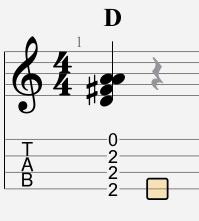
Your best bet is to follow the rhythm (on the tab) and count out loud as you go, bar by bar. For example:
bar 1: 1 &a 2 &a
bar 2: 1 & 2 &I started writing our next course this week, which is on learning to read standard notation, in turn helping you comprehend rhythms and timing. It will help greatly with tackling something like this. In the meantime, check out our rhythmic notation lesson.
August 9, 2018 at 4:20 pm in reply to: Participate in the July 2018 Member Challenge – American Patriotic Themed! #18068AndrewKeymastermayaqatsi, so sorry! I forgot to respond to you. Here is a video with some tips.
AndrewKeymasterWabbit, can you try with a different browser? Like, Chrome. Let me know if that works. In the past, folks that experience site issues are almost always using Firefox or IE. Not sure why those browsers have so many issues…
AndrewKeymasterThanks Richo! Scroll down to “Indicating a Triplet Feel in Sheet Music” in this lesson, as that answers the question.
AndrewKeymasterHi Richo, I tested it in MacBook with Safari and all worked normal. Can you try to clear the browser’s “cache” and see if that resolves the issue.
August 7, 2018 at 2:40 pm in reply to: Participate in the July 2018 Member Challenge – American Patriotic Themed! #18013AndrewKeymasterSounds great, Lucinda! I think you have a solid base established and further practice will smooth it out! I would suggest to use a diff finger in bar 9 for the Em chord, maybe middle or ring. Should make the transition to next chord easier.
AndrewKeymasterHi Marni, everything is working on my end. What browser and device are you using? Can you log out and re-log in again and try. If that doesn’t work, can you clear the browser’s “cache”, then try again.
AndrewKeymasterHi guys, looks like the “My Favorites” bug has been squashed 🙂 Let me know if you experience any more issues.
AndrewKeymasterWelcome and glad you found us! You should join us in this month’s challenge 🙂
August 4, 2018 at 6:00 pm in reply to: Participate in the August 2018 Member Challenge – “Swing Your Rhythm” Themed! #17967AndrewKeymasterExcellent job Zap (hafeez)! You’ve got a clear distinction between the feels of both rhythms, well done! Two tiny tips – Watch the tempo on the 8th note runs… so the funny thing about this feedback is I need it too, lol! I rushed those same sections. 🙂
And you should try the picado technique – it’s a more efficient way for fingerpicking versus only using 1 finger. Check out this lesson for an overview on the technique: https://rockclass101.com/la-gitanita/
AndrewKeymasterHi Rickey, I’d encourage you to only use Chrome for the site. Explorer has been replaced by Edge and will no longer be supported by the features that will be continually updated in web browsers.
The issue affects all browsers. They have not found a solution yet, but hope to have it resolved by Monday. Sorry for the inconvenience!
-
AuthorPosts